
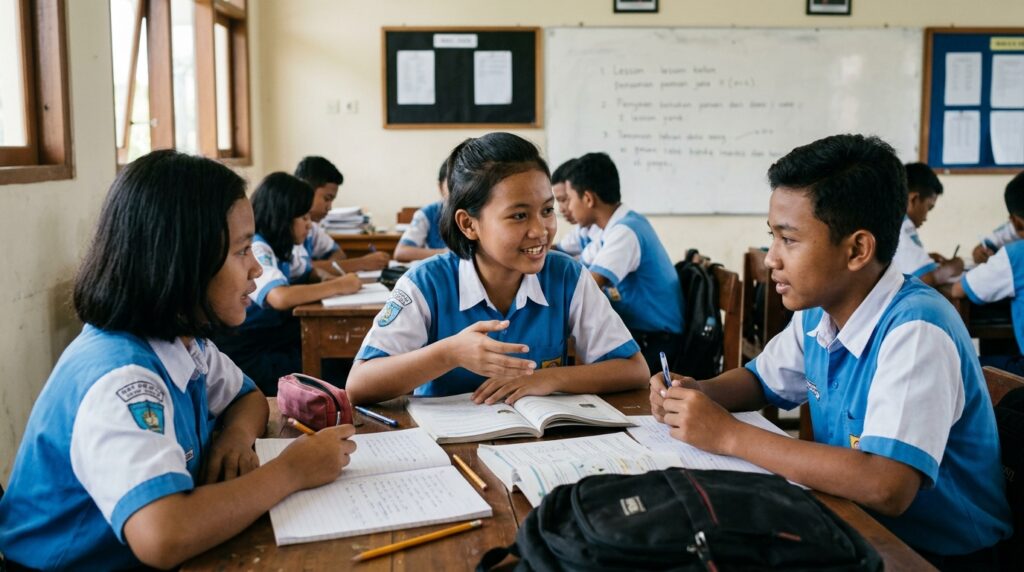
Academic achievement depends on far more than rote memorization and standardized test preparation. According to a new study published in the journal IMPROVEMENT, classroom success significantly improves when educators actively nurture student self-efficacy alongside interpersonal soft skills. Examining teaching practices at SMP Negeri 3 Muara Batu, researchers found that pupils who develop strong personal confidence and cooperative habits demonstrate far greater persistence and engagement in their daily studies.
Fostering Belief in Student Ability
Educators play a central role in shaping how learners evaluate their own academic potential. The study revealed that teachers enhanced student self-efficacy by providing consistent motivation, constructive feedback, and regular opportunities for active participation. Rather than passively listening to lectures, students were invited to share their thinking, ask questions, and take ownership of their coursework.
According to the researchers, this intentional reinforcement translated into meaningful behavioral changes. As students strengthened their belief in their personal capabilities, they displayed greater self-confidence and perseverance. This psychological foundation gave them the courage needed to tackle demanding academic challenges and persist through difficult assignments rather than giving up.
Developing Soft Skills Through Teamwork
In addition to individual self-belief, the study highlighted the importance of non-academic competencies in driving scholastic progress. Instructors relied heavily on structured collaborative learning practices—including small group assignments, team presentations, and open classroom discussions—as primary drivers for soft skill development.
Working toward shared goals compelled students to practice clear communication, listen to differing viewpoints, and divide tasks equitably. Consequently, learners strengthened their interpersonal abilities, took on greater individual responsibility for their group’s outcomes, and demonstrated heightened overall enthusiasm for schoolwork.
How the Study Was Conducted
The research was conducted by Cut Maulinda Juniar, Muhammad Anggung Manumanoso Prasetyo, and Jay Rodel Cadizal Serdenia, who employed a qualitative research case-study design to examine the ongoing learning process at SMP Negeri 3 Muara Batu in Indonesia.
To capture detailed firsthand perspectives, the authors selected participating teachers and students using purposive sampling. Data collection was carried out through in-depth qualitative interviews conducted remotely via WhatsApp, allowing informants to candidly describe their instructional routines and classroom experiences. The gathered material was then evaluated using descriptive analysis to map out the connections between pedagogical methods and student development.
The Need for a Supportive Environment
Ultimately, the researchers concluded that self-efficacy and soft skills do not thrive in isolation; they depend heavily on a healthy school culture. A comfortable learning atmosphere characterized by directed guidance and positive day-to-day interactions between teachers and peers proved essential for reinforcing academic growth.
While the study offers rich qualitative insights into classroom realities within a specific institutional setting, the authors suggest that further investigation is warranted. Conducting broader studies across diverse school environments could help educators and policymakers better understand how to scale these interconnected strategies to support learners from various educational and cultural backgrounds.
Source
- The Role of Self-Efficacy and Soft Skills in Improving Academic Quality at SMP Negeri 3 Muara Batu
- Researchers: Cut Maulinda Juniar, Muhammad Anggung Manumanoso Prasetyo, Jay Rodel Cadizal Serdenia
- Journal: IMPROVEMENT Jurnal Ilmiah untuk peningkatan mutu manajemen pendidikan
- Read the original study