
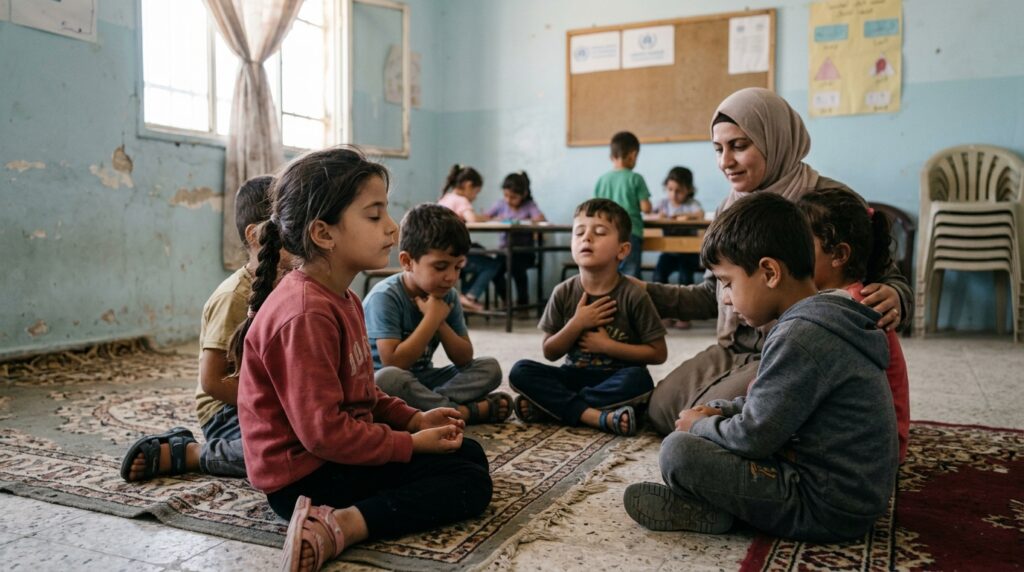
Living under the persistent threat of armed conflict takes a profound toll on developing minds. A study published in the journal Mindfulness reveals that introducing brief, structured mindfulness practices into daily preschool activities can help shield young children from the damaging effects of chronic trauma. Conducted by researchers Anat Atiya Malki and Ricardo Tarrasch, the investigation demonstrates that simple classroom-based exercises can serve as an emotional buffer for children repeatedly exposed to cross-border missile strikes.
A Buffer Against Ongoing Trauma
Children chronically exposed to rocket attacks and military hostilities often face severe developmental strain, but the study revealed a clear divergence in their emotional paths based on whether they practiced mindfulness. Over the 12-week study, children in the control group experienced worsening internalizing behaviors—such as social withdrawal and anxiety—alongside rising externalizing behaviors, including aggression and conduct issues.
In contrast, preschoolers who took part in the mindfulness intervention remained emotionally and behaviorally stable despite the ongoing conflict. Rather than deteriorating under chronic adversity, these children maintained their baseline functioning. Furthermore, the intervention group demonstrated clear improvements in prosocial behaviors, such as sharing, cooperation, and empathy, with benefits holding steady across both age and gender.
Bringing Mindfulness into Daily Preschool Routines
The study evaluated 150 children aged 3 to 6 enrolled in preschools near the Gaza border, an area subject to frequent sirens and bombardments. Researchers split the cohort into two groups, comparing 94 children who received the intervention against 56 who served as the control group.
Rather than relying on clinical appointments outside the classroom, educators implemented the “Focused and Mindful” program directly within the existing preschool schedule. Over 12 weeks, teachers integrated short, developmentally appropriate mindfulness exercises into regular daily transitions and routines. To assess the intervention’s impact, the researchers administered standardized pre- and post-intervention questionnaires to both parents and teachers, tracking emotional difficulties, behavioral patterns, and indicators of resilience.
Why Early Emotional Scaffolding Matters
Early childhood represents a delicate developmental window where prolonged exposure to acute danger can severely disrupt emergent emotional regulation and fuel chronic anxiety. Left unaddressed, early toxic stress can derail social and cognitive development.
Embedding simple, calming practices into the school environment provides essential psychosocial support without requiring individualized clinical therapy, which is often scarce or inaccessible during ongoing crises. According to the study, delivering these exercises within trusted educational spaces creates an accessible psychological scaffold that protects young children’s mental well-being under intense, chronic adversity.
Study Limitations and Future Applications
Despite the encouraging results, the researchers noted several limitations. The study was not preregistered, and conducting field trials in active conflict zones introduces unavoidable logistical challenges that can complicate experimental control. Additionally, because assessments were taken immediately following the 12-week intervention, longer-term follow-up studies are needed to determine whether these emotional benefits endure once active classroom guidance ceases.
Nonetheless, the researchers concluded that early mindfulness programs are feasible and scalable in high-stress environments. They recommend integrating developmentally tailored mindfulness curricula into broader educational and psychosocial policies to safeguard children growing up in conflict zones around the world.
Source
- Mindful Little Minds: Reducing Posttraumatic Symptoms and Supporting Preschoolers Facing Chronic Stress
- Researchers: Anat Atiya Malki, Ricardo Tarrasch
- Journal: Mindfulness
- Read the original study